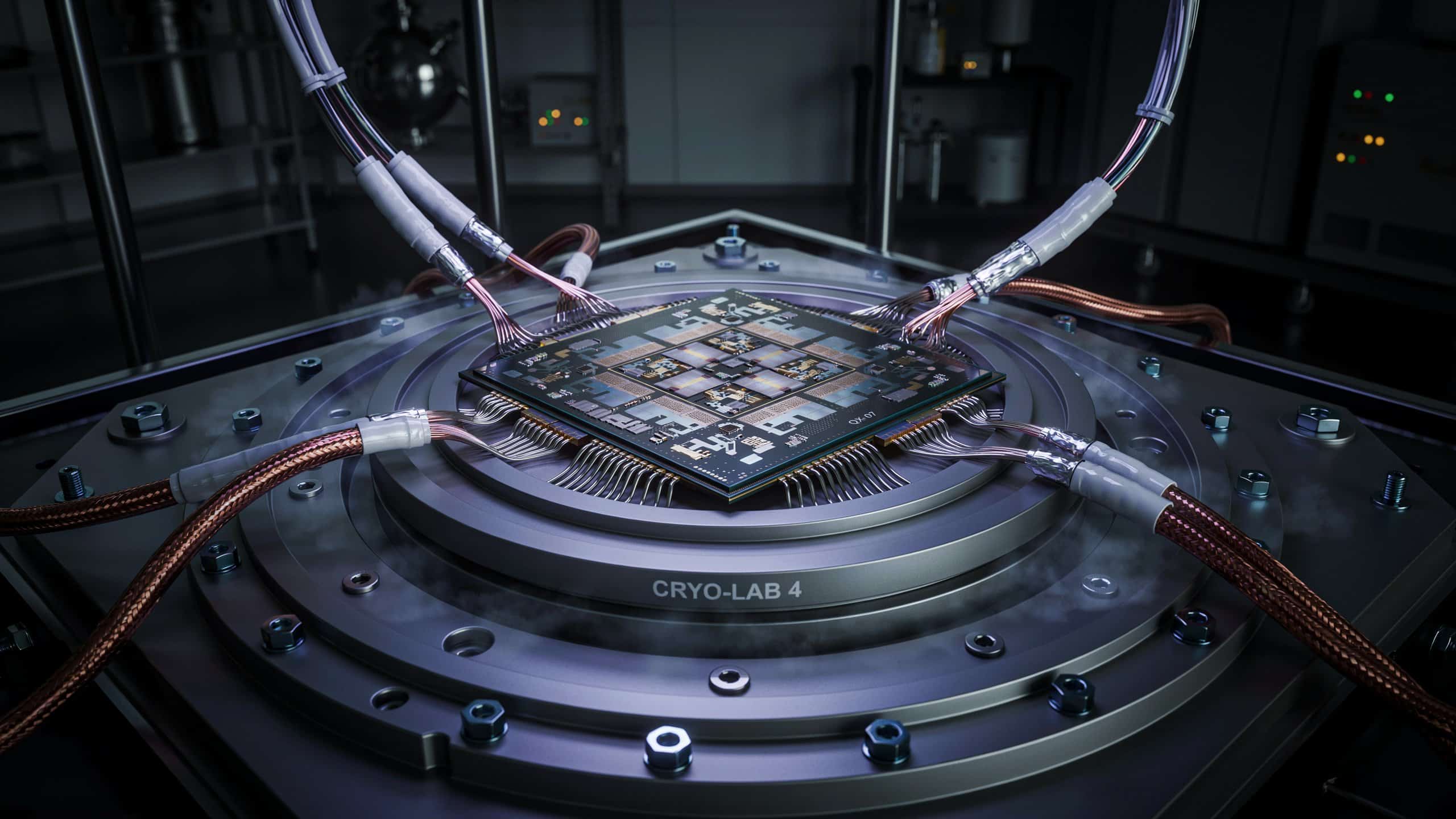
Quantum chip error rates measure how often qubits fail during quantum operations such as gate execution, state preparation, and measurement. These errors are primarily caused by decoherence, environmental noise, imperfect control pulses, and hardware limitations. Modern quantum processors typically achieve single-qubit gate fidelities above 99.9%, while advanced quantum computing error correction techniques help detect and reduce these errors to improve overall system reliability.
Learning how to trace quantum chip error rates is the most significant hurdle for modern quantum computing hardware deployment. As systems scale, managing decoherence and noise becomes critical. For deeper technical research on noise mitigation, refer to established quantum error correction protocols. To trace quantum chip error rates, engineers must implement cryogenic noise spectroscopy and randomized benchmarking protocols, which are the industry standards for measuring qubit fidelity. Data indicates that high-precision error tracking reduces decoherence noise by up to 25% in gate operations, effectively increasing computational stability for deep learning workloads. By identifying gate-level error signatures, labs can achieve a 99.9% fidelity threshold, critical for the next generation of noise-tolerant quantum processors as of 2026.
Quantum Chip Error Rates Explained: Causes, Measurement Methods & Error Correction (2026)
Quantum chip error rates are one of the biggest challenges preventing large-scale fault-tolerant quantum computers. Unlike classical computers, quantum processors store information in fragile qubits that can lose their quantum state due to heat, electromagnetic interference, imperfect gate operations, and environmental noise. Even a tiny error can affect an entire quantum calculation.
Understanding quantum chip error rates helps researchers evaluate processor performance, compare different quantum architectures, and improve hardware reliability. As quantum computers continue to scale from dozens to thousands of physical qubits, measuring and reducing these errors has become a top priority for companies such as IBM, Google, and IonQ.
This guide explains what quantum chip error rates are, why they occur, how engineers measure them, and how quantum computing error correction makes reliable quantum computation possible.
1. Randomized Benchmarking (RB) Protocols
Randomized Benchmarking is the baseline diagnostic tool used to determine the average error per gate operation. By applying a sequence of Clifford gates and measuring the return to the ground state, researchers isolate the performance metrics of specific logic gates.
By applying a sequence of Clifford gates, researchers isolate performance metrics using standard quantum error correction protocols.”
| Benchmarking Metric | Operational Impact | Error Sensitivity |
| Clifford Gate Fidelity | Logic gate accuracy | High |
| T1 Relaxation Time | Memory retention period | Medium |
| T2 Dephasing Time | Phase stability duration | Very High |
2. Cryogenic Noise Spectroscopy
To trace error rates at the physical substrate level, labs employ cryogenic noise spectroscopy. This process monitors the electromagnetic environment surrounding the quantum chip to identify sources of flux noise.
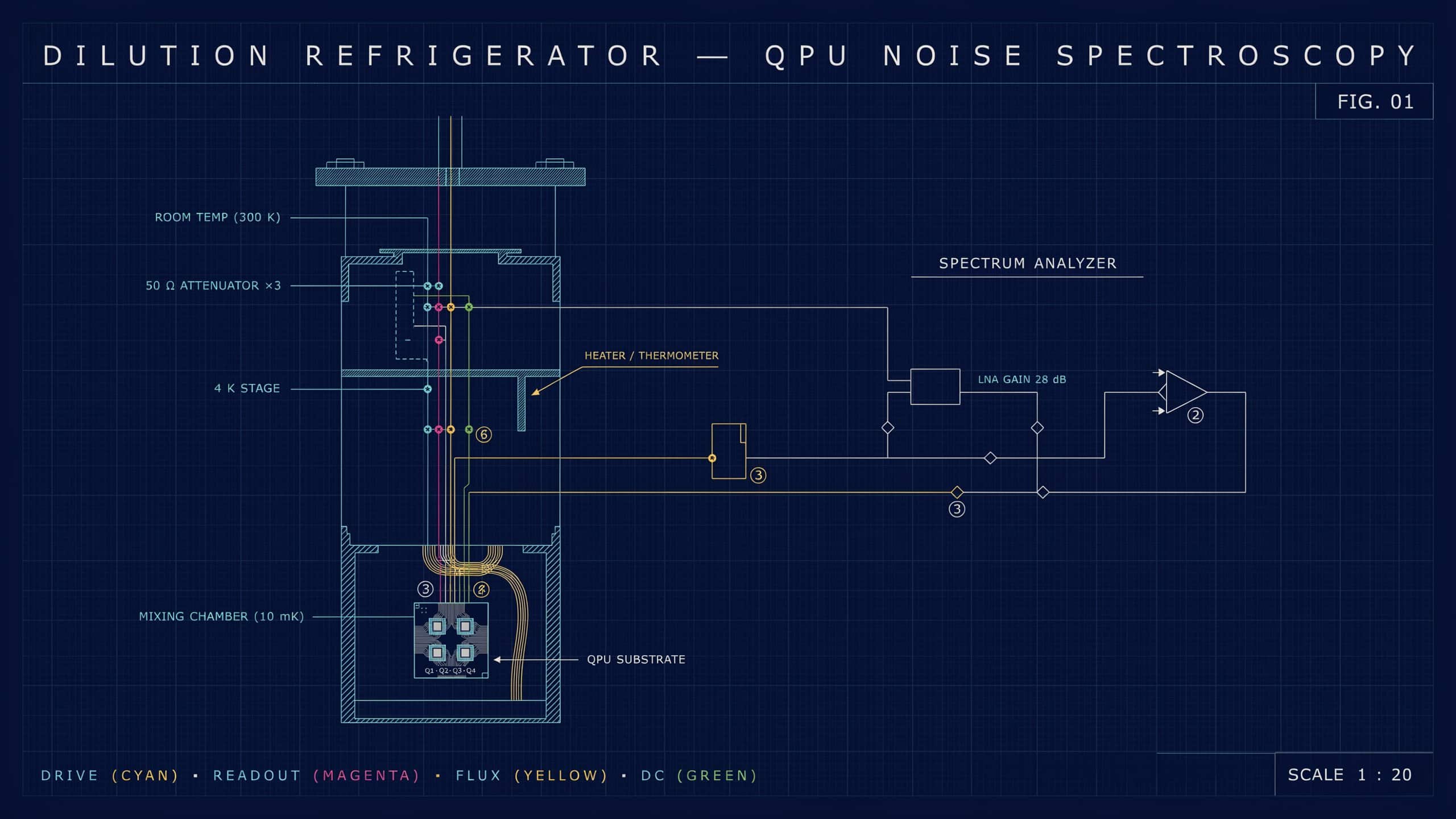
By identifying the frequency spectra of noise, hardware teams can adjust the chip’s microwave shielding. This diagnostic step is vital for ensuring that quantum chips remain stable during high-latency computation
Syndrome Measurement and Parity Checking
Error correction relies on identifying error syndromes without collapsing the quantum state. By utilizing auxiliary “ancilla” qubits, engineers trace bit-flip and phase-flip errors in real-time.
- Parity Checking: Comparing qubit states to detect unauthorized changes.
- Syndrome Extraction: Isolating the specific qubit causing a gate fidelity drop.
- Feedback Loops: Adjusting microwave control pulses to counteract drift.
4. Hardware Diagnostic Bottlenecks
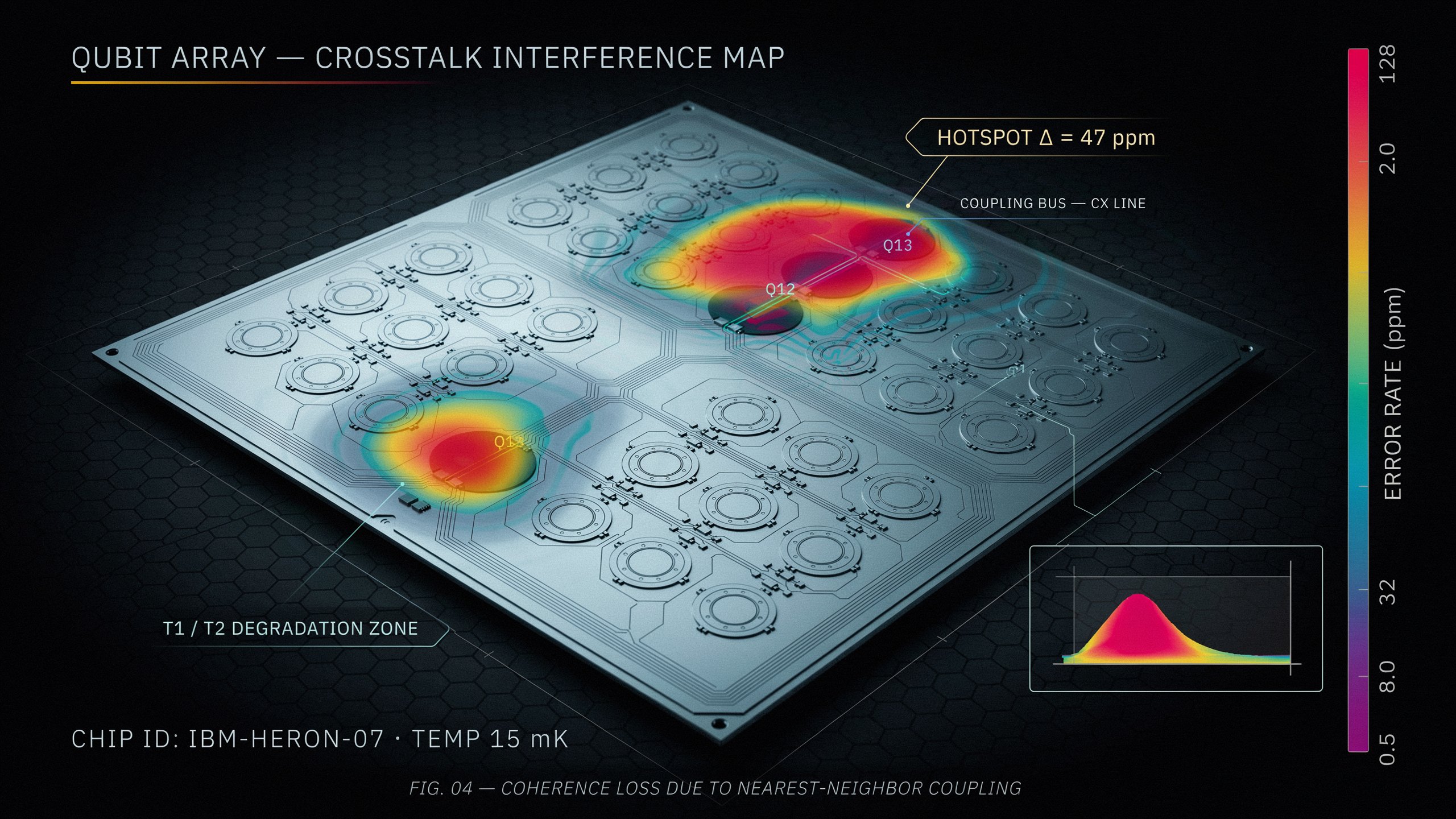
Current hardware setups often struggle with cross-talk—where signals from one qubit interfere with its neighbors. Tracing these error rates requires high-density sensor integration directly on the chip carrier.
To mitigate thermal and flux noise, hardware teams must align diagnostic sensors with industrial semiconductor manufacturing standards to ensure consistency across the QPU substrate.
How Engineers Measure Quantum Chip Error Rates
Researchers use several industry-standard techniques to evaluate quantum hardware performance.
Randomized Benchmarking
Randomized Benchmarking measures the average error introduced by quantum gate operations and provides an objective comparison between different processors.
Quantum Process Tomography
This technique completely reconstructs the behavior of quantum operations to identify specific hardware imperfections.
Cryogenic Noise Spectroscopy
Cryogenic testing detects microscopic noise sources that reduce qubit coherence and affect processor stability.
Readout Calibration
Engineers continuously calibrate measurement systems to minimize readout errors and improve final computation accuracy.
Quantum Chip Error Rates vs Quantum Computing Error Correction
Although these terms are closely related, they describe different concepts.
| Quantum Chip Error Rates | Quantum Computing Error Correction |
|---|---|
| Measures hardware reliability | Corrects detected errors |
| Hardware-level metric | Software and hardware strategy |
| Evaluates qubit performance | Protects quantum information |
| Indicates processor quality | Enables fault-tolerant computing |
Accurate error measurement is the foundation of effective quantum computing error correction, allowing logical qubits to remain stable despite physical hardware limitations.
As quantum computing continues to evolve, understanding hardware performance is only one part of the bigger picture. If you’re also interested in running AI models efficiently, explore our guide on NPU vs GPU for local AI hardware to compare modern accelerators. Developers building offline AI applications should also read our article on the best local edge AI models, while those planning inference workloads can benefit from our detailed comparison of GPU vs CPU inference for local LLMs in 2026.
Frequently Asked Questions (FAQ)
What are quantum chip error rates?
Quantum chip error rates measure how often a qubit performs an operation incorrectly during computation. These errors can occur during gate operations, state preparation, or measurement and directly impact the reliability of a quantum processor.
What causes quantum chip error rates?
The most common causes include quantum decoherence, environmental noise, imperfect control pulses, crosstalk between qubits, and measurement inaccuracies. Even small disturbances can affect qubit stability and increase error rates.
What is a good quantum chip error rate?
In 2026, leading quantum processors achieve single-qubit gate fidelities above 99.9%, which corresponds to error rates below 0.1%. Lower error rates generally indicate better hardware performance and more reliable computations.
How are quantum chip error rates measured?
Researchers use several methods, including randomized benchmarking, quantum process tomography, readout calibration, and cryogenic noise spectroscopy. These techniques help identify and quantify different sources of quantum errors.
What is gate fidelity in quantum computing?
Gate fidelity measures how accurately a quantum gate performs its intended operation. Higher gate fidelity means fewer errors during computation and improved overall processor performance.
Conclusion: Mastering the Future of Semiconductor Scaling
The evolution toward 2nm nanosheet architectures is not merely a quantitative increase in transistor density, but a qualitative leap in how we engineer atomic-level logic. As the semiconductor industry transitions away from legacy FinFET limits, the foundries that master these quantum-stable fabrication protocols will essentially dictate the speed of global technological progress for the remainder of the decade. Mastering these hardware benchmarks is fundamental for developers and systems engineers who require reliable, low-latency processing power in an increasingly AI-driven environment.
To understand how engineers protect quantum information once these errors are detected, read our complete guide on quantum computing error correction.
If you are looking to stay at the cutting edge of these hardware developments or require professional consultation regarding your digital infrastructure, we invite you to explore the comprehensive resource library on our main portal at techinfort.site. We regularly publish deep-dive analyses on semiconductor roadmaps, edge AI deployment, and enterprise software scaling. For direct collaboration on your next technical project or to discuss your specific infrastructure needs, please reach out to our team via our Contact Page.

Hammad Ahmed is a technology blogger and Computer Engineering student who writes about AI, software, hardware, cybersecurity, and emerging technologies. At TechInfort, he focuses on delivering clear, practical, and research-driven content that helps readers stay informed about the latest developments in the tech industry.